Seventeen-Position Wire-Cut Insert Bar for a Progressive Stamping Die
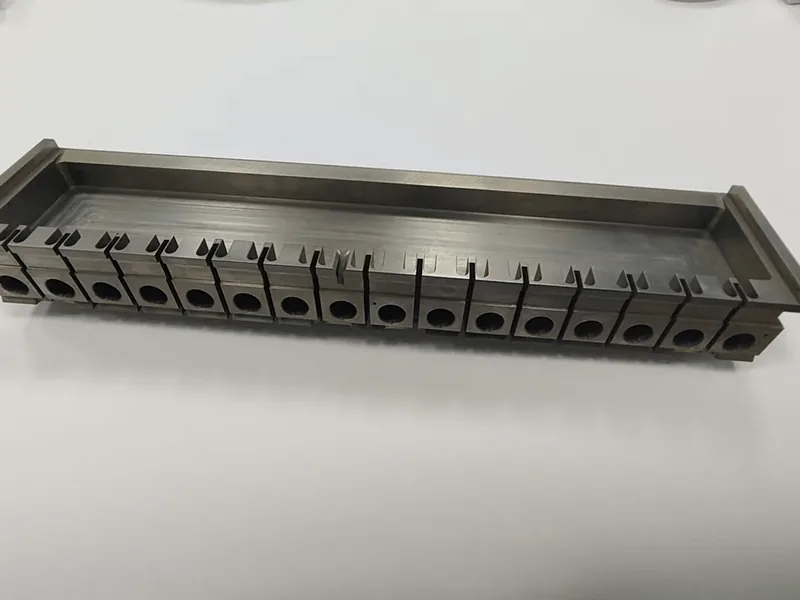
A hardened tool steel insert bar with seventeen identical wire-cut positions, routed rough-mill, heat treat, then wire cut, and checked for accumulated pitch across the full row before release.
CNC Milling, Wire EDM
Tool Steel SKD11, 58–60 HRC, As Machined
What The Project Asked For
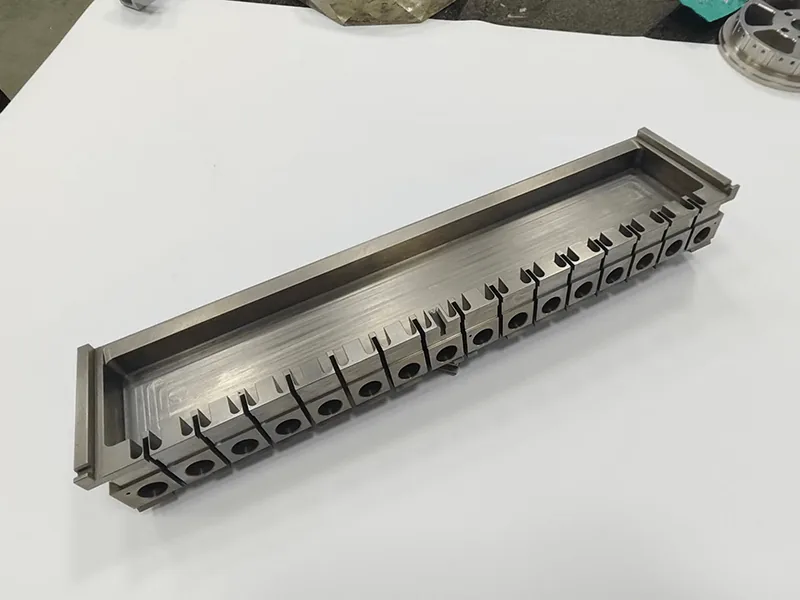
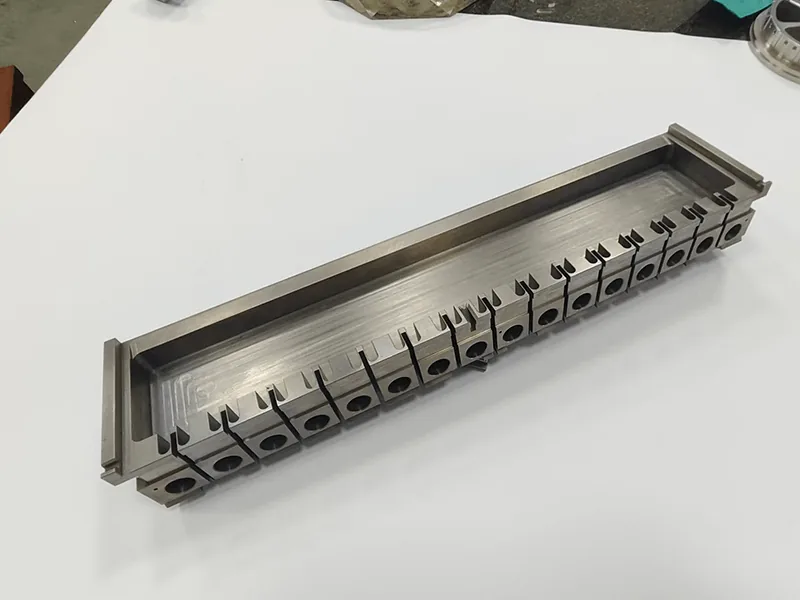
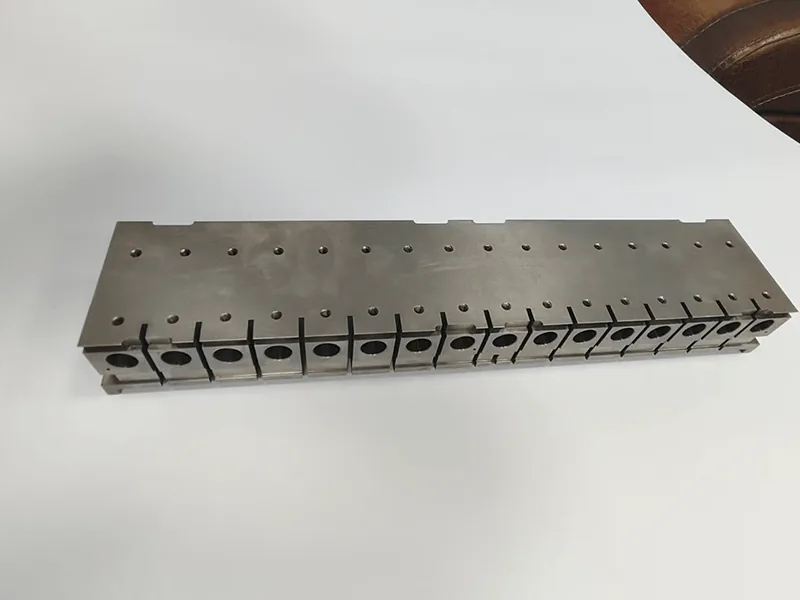
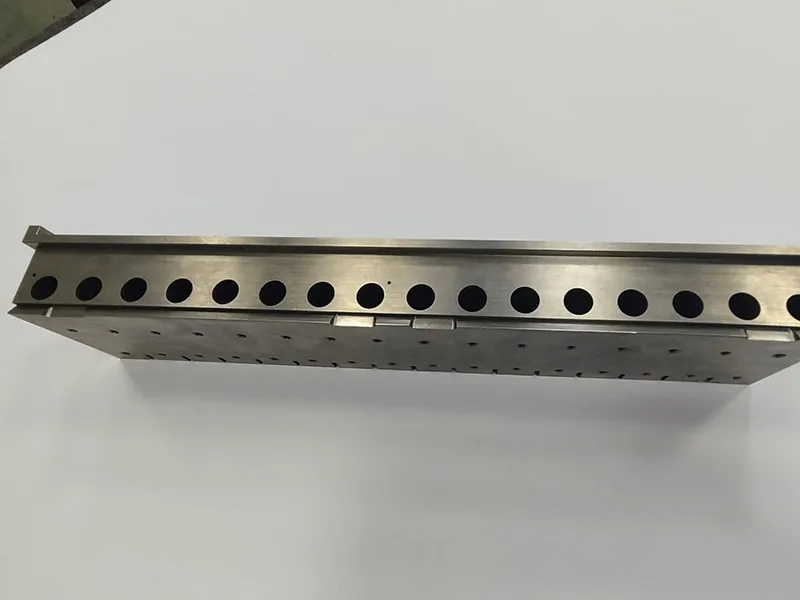
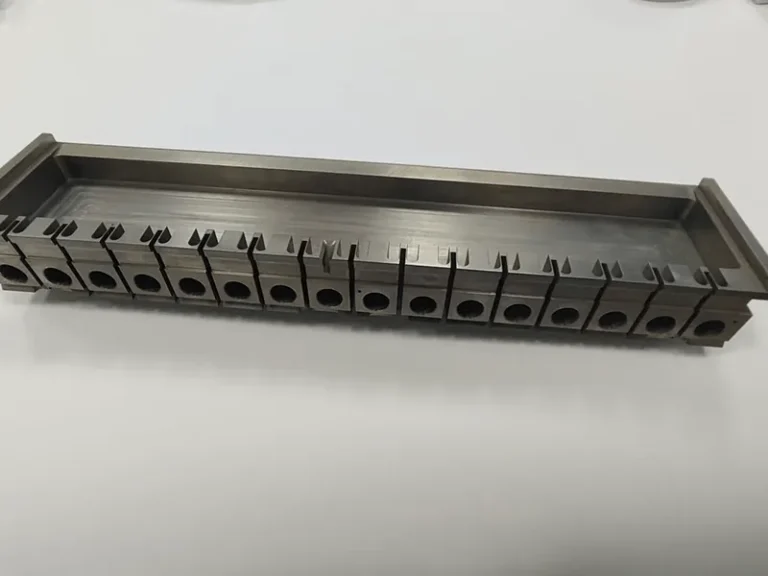
A die maker supplying automotive connector tooling ordered a replacement insert bar: a long holder carrying seventeen identical inserts, each with a bore and a profiled tip, seated in a milled channel. The bar feeds a strip in a progressive die, so the accumulated pitch across all seventeen positions decides whether the strip feeds cleanly.
The inserts are SKD11 hardened to 58–60 HRC. The holder was milled soft, the inserts were roughed soft and hardened, and the profiles and bores were wire cut after heat treatment so the finished features carry no hardening distortion.
Each insert was measured individually and the assembled row was measured end to end on the vision measuring system.
At A Glance
- Project Type
- Wire EDM Component
- Industry
- Automotive, Electronics & Robotics
- Material
- Tool Steel
- Material Grade
- SKD11, 58–60 HRC
- Machining Process
- CNC Milling, Wire EDM
- Surface Finish
- As Machined
The Numbers That Drove The Process
The tolerances, finishes, and quantities this part had to meet before it could leave the shop.
Accumulated pitch
±0.01 mm over 17 positions
Insert profile
±0.005 mm
Hardness
58–60 HRC, checked on the bench tester
Interchangeability
Any insert fits any position
Machining, Inspection And Finished Parts
Photos from the job itself. Click any image to open it at full size.
How This Project Ran
What the drawing asked for, how the part was machined and inspected, and what was shipped at the end.
Heat treatment moves a part. If the insert profiles are cut before hardening, the distortion ends up inside the finished feature. And on a ganged row, a pitch error that is acceptable between two neighbours accumulates into a misfeed by the seventeenth position, which is exactly what the previous bar had been doing in the press.
The route was set as rough mill, heat treat, then wire EDM last, so the final operation removes the hardening distortion instead of preserving it. Datum edges were ground square before cutting so every insert profile references the same edge. Hardness was checked on the bench tester after heat treatment. Each insert was measured optically, and the assembled bar was measured across the full row for accumulated pitch rather than only pitch between neighbours.
The bar was fitted to the die and the strip fed without adjustment. Accumulated pitch across the seventeen positions measured within tolerance, and the inserts interchange within the set so a worn position can be replaced individually.
Have A Part That Needs The Same Treatment?
Send the drawing with the material, quantity, and the tolerances your inspection actually checks. Owen reviews it against how this job was run and comes back within 24 hours on business days with a price, a lead time, and DFM notes before you commit to anything.
Parts From This Project And Similar Work
Machined parts that share the same industry or process, with material, process, and application on each card.
Send Your Drawing, Get A Quote In 24 Hours
A STEP, IGES, or PDF file with the material, quantity, and the tolerances that matter is enough to start. You get a price, a lead time, and manufacturability feedback from a real person, not a bot.

Owen Lan
Sales, Zhongjiecheng Auto
Replies within 24 hoursEvery message from this page reaches me directly. If your part looks anything like the one above, tell me the material, the quantity, and the dimensions you care about most, and I will tell you how we would run it.
Prototypes and production runs both welcome. Tolerances, finishes, inspection records, and packing are confirmed before you pay a deposit.
Owen Lan
Sales, Zhongjiecheng Auto CNC Machining
Tell Us About Your Parts
Fields marked * are required.