CNC Machining for Semiconductor Equipment
Carrier plates, nest plates, handling fixtures and equipment brackets for semiconductor and substrate handling, machined for flatness, hole position and clean, burr-free edges, and measured free of the fixture rather than clamped in it.
Machined Parts For CNC Machining for Semiconductor Equipment
Aluminum, Stainless Steel, Engineering Plastics
What These Parts Have To Do
The working conditions, the fits, and the acceptance rules that shape how we quote and machine for CNC Machining for Semiconductor Equipment.
Parts for semiconductor equipment are judged on surfaces and positions rather than on outline dimensions. A carrier plate that seats an array of components has to be flat enough that every position sits at the same height, its grid of openings has to be at the right accumulated pitch across the whole plate, and its edges have to be clean enough that nothing sheds onto the product it carries.
The parts we machine for this work are thin aluminum and stainless plates with dense hole and pocket patterns, fork-style transfer plates, matched carrier and nest plate sets, and brackets and mounts for handling equipment. The features that control them are flatness over the working area, position across the pattern, and edge condition.
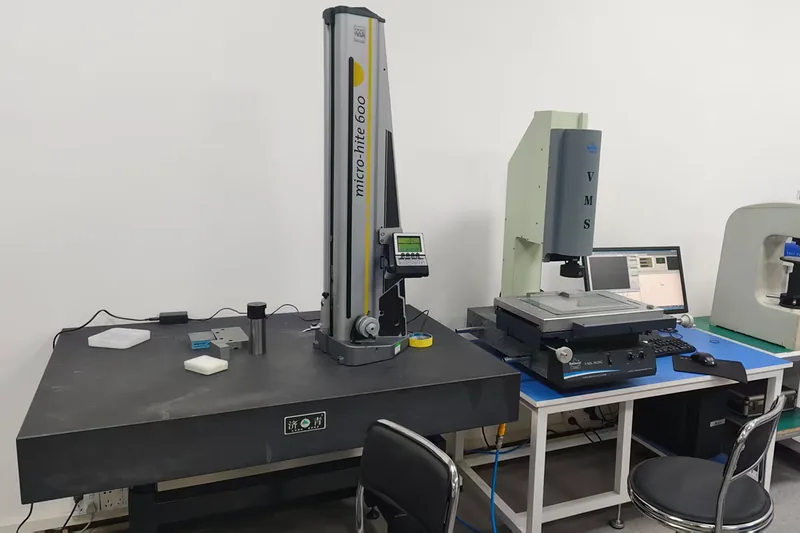
Flatness is the number that trips these parts. A thin plate that measures flat in the vice can bow when it is released, so we rough, release, and finish with light passes and softer clamping, and we measure flatness on the granite plate after the part is free. Small openings and fine pitches are measured optically on the vision measuring system rather than with hand tools.
Send the drawing with the datum scheme and say which faces and openings are functional. On these parts the difference between a cosmetic edge and a functional one decides the process route, and we would rather know before we cut.
What The Drawings Usually Demand
The recurring requirements on CNC Machining for Semiconductor Equipment drawings, and what each one means for how the part is machined and checked.
Flatness
<p>Thin plates are roughed, released and finished with light passes, and flatness is measured on a granite plate after the part is free, not while it is clamped.</p>
Position Accuracy
<p>Hole and pocket patterns are checked for accumulated pitch across the whole plate on the vision measuring system, because a small error repeated across a grid is what misaligns an array.</p>
Clean Surfaces
<p>Edges are deburred and inspected; parts are handled and packed so functional faces are not scratched or marked between the machine and your dock.</p>
Dimensional Stability
<p>Material grade and condition are confirmed before machining so a plate does not move after it is cut or after it is coated.</p>
Fixture Repeatability
<p>Handling fixtures and nests are checked as assemblies, with the locating features measured after the fixture is bolted together.</p>
A Drawing And A Quantity Is Enough To Start
If the print is not final, or the tolerances are still being decided, send it anyway. Owen reads the drawing, flags what needs confirming, and comes back with a price range and the questions that matter, within 24 hours on business days.
Parts We Have Made For CNC Machining for Semiconductor Equipment
Material, process, and application on every card. Open a part to see the specification and the inspection it received.
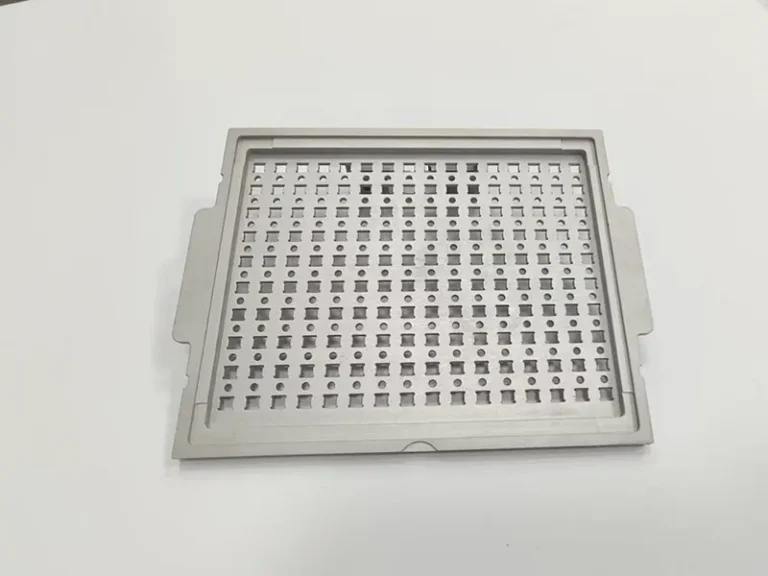
Perforated Carrier and Nest Plate Set for Component Arrays
- Process: CNC Milling
- Material: Aluminum
- Industry: Medical Devices, Semiconductor
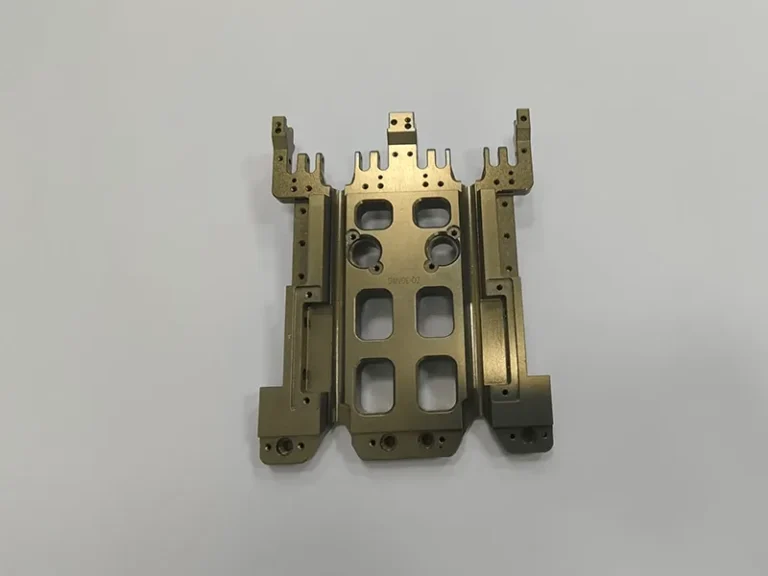
Anodized Aluminum Fork Transfer Plate for Substrate Handling
- Process: CNC Milling
- Material: Aluminum
- Industry: Industrial Automation, Semiconductor
Where These Parts End Up
The assemblies and equipment that CNC Machining for Semiconductor Equipment buyers most often source machined parts for.
Substrate and wafer handling plates
<p>Fork-style transfer plates and lightened handling plates whose controlling dimensions are the finger positions and the dowel pattern.</p>
Carrier and nest plate sets
<p>Through-cut carrier plates with grids of square and round openings and matching pocketed nest plates that seat the same array.</p>
Handling and positioning fixtures
<p>Fixtures that hold components at a defined position and height for automated handling, checked for repeatability as an assembly.</p>
Inspection and test fixtures
<p>Nests and locators that present a component to a camera or a probe the same way every cycle.</p>
Equipment brackets and mounts
<p>Anodized aluminum brackets, bars and mounts for handling equipment, machined to the bolt pattern of the machine they fit.</p>
Every CNC Machining for Semiconductor Equipment Quote Comes With DFM Notes
Owen reads the drawing before pricing it: tolerances that add cost, features that need a second setup, finishes that change lead time. Send a STEP or PDF with the material and quantity, and the quote reflects what is actually machinable, within 24 hours on business days.
Processes We Use For CNC Machining for Semiconductor Equipment
Each service page lists the equipment, the working envelope, and the tolerances we hold on that process.
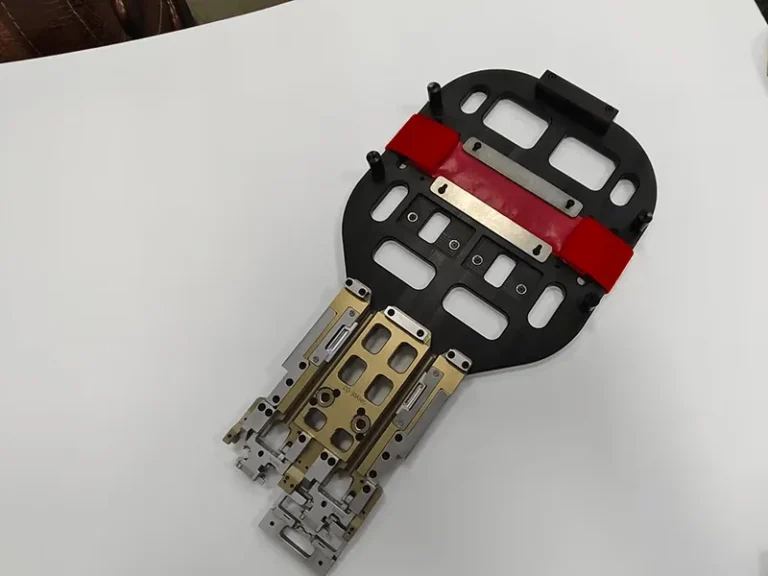
Custom Jigs and Fixtures
Workholding, assembly jigs, checking fixtures and robot end-of-arm tooling built to your part and your machine interface. We machine the plates, the locators and…
View Service →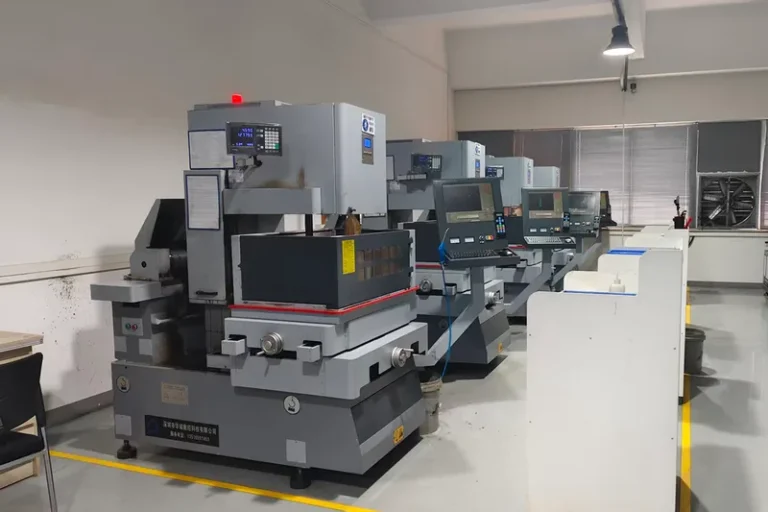
Wire EDM Services
Four wire EDM machines cutting profiles a milling cutter cannot produce: square internal corners, blades well under a millimetre wide, and hardened tool steel…
View Service →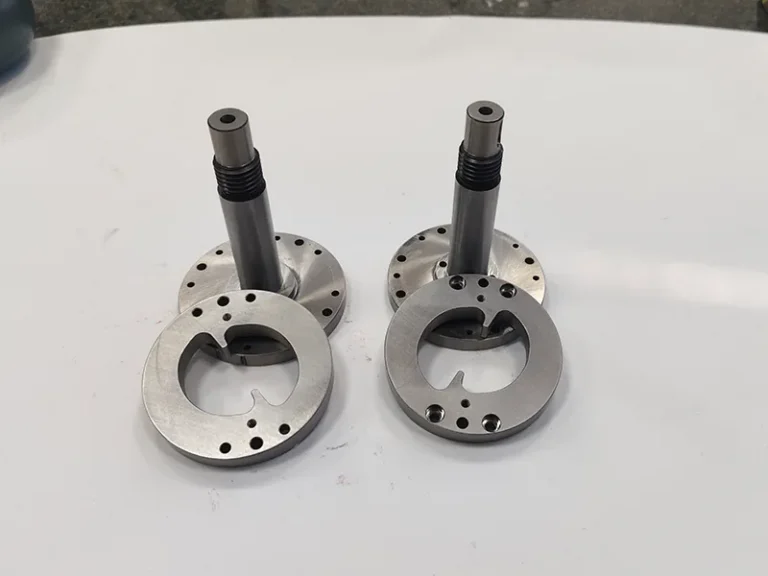
CNC Turning Services
Turned shafts, flanges, bushings, pins and rings, with the milled and drilled features finished on the same part. Tell us which diameter is the…
View Service →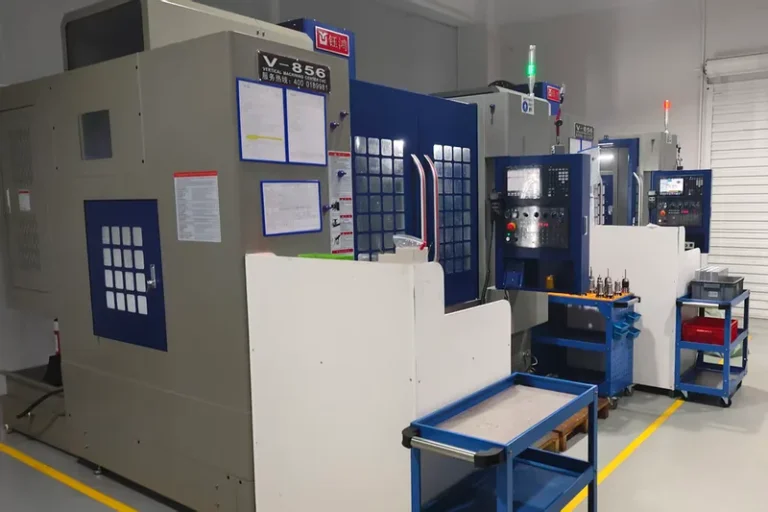
CNC Milling Services
Vertical machining centre work on housings, frames, plates, brackets and contoured parts, from a single prototype to a repeat batch. Send the drawing with…
View Service →Custom CNC Machining Services
We machine parts to your drawing in our own shop — milling, turning, wire EDM, and the fixtures that hold the work. Send a…
View Service →Processes, Materials And Finishes For CNC Machining for Semiconductor Equipment
What we most often run for this industry. If your drawing calls for something not listed, send it anyway and we will confirm.
Processes
How the parts are cut.
Materials
What they are made from.
Finishes
How they are protected and finished.
Material Certificates And Inspection Reports Travel With The Parts
Tell Owen which records your receiving inspection needs: mill certificates, first article report, CMM report, certificate of conformance, or all of them. They are agreed at quoting, not requested after the parts arrive.
What Changes When We Machine For CNC Machining for Semiconductor Equipment
The two things that go wrong on semiconductor equipment parts are flatness after release and edge condition. We treat both as process decisions, not inspection decisions: thin plates are cut in a rough-release-finish sequence, and edge breaks and deburring are specified on the traveller rather than left to the operator.
Small features on these parts are usually below what hand tools can measure honestly. Slot widths, grid pitches and small hole positions are measured on the Rational VMS-3626 vision measuring system, and the accumulated dimension across a pattern is checked as well as the pitch between neighbours.
Tell us how the part is handled after it leaves us. Some plates need protective film on functional faces, individual bagging, or a specific packing orientation, and that is easier to arrange before the batch is finished than after it has been stacked.
Projects From CNC Machining for Semiconductor Equipment
Real drawings, the requirement that drove each job, and what shipped.
Matched Carrier and Nest Plate Set for a Component Array Handler
- Industry: Medical Devices, Semiconductor
- Process: CNC Milling
- Key requirement: Accumulated pitch across grid: ±0.03 mm
Anodized Aluminum Fork Transfer Plates for a Semiconductor Handling Module
- Industry: Semiconductor
- Process: CNC Milling
- Key requirement: Finger position: ±0.02 mm from the dowel datum
Machining Parts For CNC Machining for Semiconductor Equipment? Send The Drawing.
A STEP, IGES, or PDF file with the material, quantity, and the tolerances that matter is enough to start. You get a price, a lead time, and manufacturability feedback from a real person, not a bot.

Owen Lan
Sales, Zhongjiecheng Auto
Replies within 24 hoursEvery message from this page reaches me directly. Tell me which surfaces are functional, which dimensions your inspection checks, and the quantity, and I will tell you how we would run the part and what it costs.
Prototypes and production runs both welcome. Tolerances, finishes, inspection records, and packing are confirmed before you pay a deposit.
Owen Lan
Sales, Zhongjiecheng Auto CNC Machining
Tell Us About Your Parts
Fields marked * are required.